

Robotic Surgery in Transplantation
How Robotic Surgery May Transform Organ Transplantation

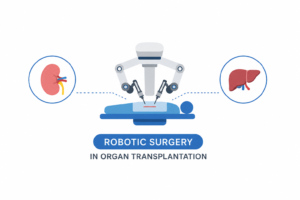
Organ transplantation is evolving with the development of minimally invasive surgical techniques. After laparoscopic surgery, robotic surgery is gaining attention in several complex surgical procedures.
An article published in Annals of Surgery explores the potential impact of robotic techniques on organ transplantation outcomes. The authors provide an overview of robotic surgery in transplantation, combining a systematic literature review, original data from a high-volume center, and an international survey on perceptions of robotic, laparoscopic, and open approaches.
Toward Less Invasive Transplant Procedures
Robotic surgery is part of a broader evolution toward minimally invasive surgery. Its objective is to allow precise surgical procedures through a less invasive approach than traditional open surgery. In transplantation, this evolution may concern both donors and recipients. The article specifically mentions donor nephrectomy, recipient kidney transplantation, and donor hepatectomy. These procedures are important because they directly relate to donor safety, recipient outcomes, and the overall quality of the transplant pathway.
An Analysis Combining Several Sources
The article is not based on a single type of data. The authors describe it as a perspective including three main components. The first component is a systematic review of the literature. The second is original data from a high-volume center. The third is an international survey focusing on perceptions of robotic, laparoscopic, and open surgical approaches. This structure allows the authors to discuss robotic surgery in transplantation from several angles: published outcomes, clinical experience from a specialized center, and perceptions among the international transplant community.
Favorable Results in Selected Procedures
According to the authors, the systematic review and meta-analysis revealed lower morbidity with robotic approaches in several procedures. The procedures mentioned are donor nephrectomy, recipient kidney transplantation, and donor hepatectomy. These findings suggest that robotic surgery may help reduce morbidity in selected transplant-related procedures. This point should be interpreted carefully. The article reports favorable results across several procedures, but this does not mean that robotic surgery can automatically be applied to every transplant situation.
Experience From a High-Volume Center
The authors also report their center’s experience with more than 3,000 minimally invasive transplant procedures. These procedures involved kidney and liver transplantation, as well as donor and recipient surgery. According to the article, this experience supports the role of robotic transplant surgery. It also shows that robotic techniques can be integrated into specialized transplant programs with significant expertise. This is an important point. Robotic surgery in transplantation remains complex. It requires dedicated organization, specific surgical expertise, and advanced technical training.
A Preference for Robotic Approaches, With Important Challenges
The international survey described in the article suggests a preference for robotic approaches, mainly because of their reduced morbidity. However, the authors also highlight important challenges. The cost of robotic systems remains a major barrier. Access to robotic technology is not equal across centers or countries. Specialized surgical training is another key issue. The development of robotic transplant surgery will therefore depend not only on clinical outcomes, but also on economic, technical, and organizational factors.
Potential Benefits for Donors and Recipients
One of the important messages of the article is that robotic surgery may be relevant for both donors and recipients. For donors, this issue is particularly important. Any innovation must prioritize the safety of a person who does not receive a direct therapeutic benefit from the procedure. For recipients, the goal is to improve surgical and postoperative outcomes while maintaining the quality of transplantation. The article therefore presents robotic surgery as a possible evolution for several transplant procedures, rather than as a single solution that applies to all cases.
Challenges Before Wider Adoption
The authors conclude that the future of robotic transplant surgery will depend on the ability of the surgical community to address several challenges. The first challenge is economic. Robotic systems require substantial investment from healthcare institutions. The second challenge is training. Wider adoption will require specialized education for many surgeons. The third challenge is access. For robotic transplant surgery to expand, robotic systems will need to become more widely available, beyond a limited number of expert centers.
What This Article Brings to Organ Transplantation
This article presents robotic surgery as an important evolution in organ transplantation. The authors report favorable findings in several procedures, including donor nephrectomy, recipient kidney transplantation, and donor hepatectomy. At the same time, the article emphasizes that wider implementation will depend on cost, access to robotic systems, specialized training, and careful clinical adoption. Robotic surgery therefore appears to be a promising approach in transplantation, but its broader use will require continued organizational, economic, and educational efforts.
This article is intended for scientific information purposes only and summarizes the findings reported by the authors. Robotic transplant surgery is presented here based on the article reviewed and should be interpreted within the context and limitations of the publication.
Source
This article is based on the scientific publication:
Revolutionizing Organ Transplantation With Robotic Surgery, published in Annals of Surgery. DOI: 10.1097/SLA.0000000000006460.
Full article here.
This article is brought to you by IGL as part of its scientific news sharing.